At the End of the World Newsletter – 15 June 2026
|  | This is the 14th newsletter for the At the End of the World research program, based at Lund University. It is the second newsletter from our fourth year of activity. If you’re receiving this email, it’s because you’ve subscribed to our mailing list. Below, we’ll fill you in on some upcoming events and also what we've been up to since the last newsletter. | | |
Upcoming webinar on 20 October 2026 | | |
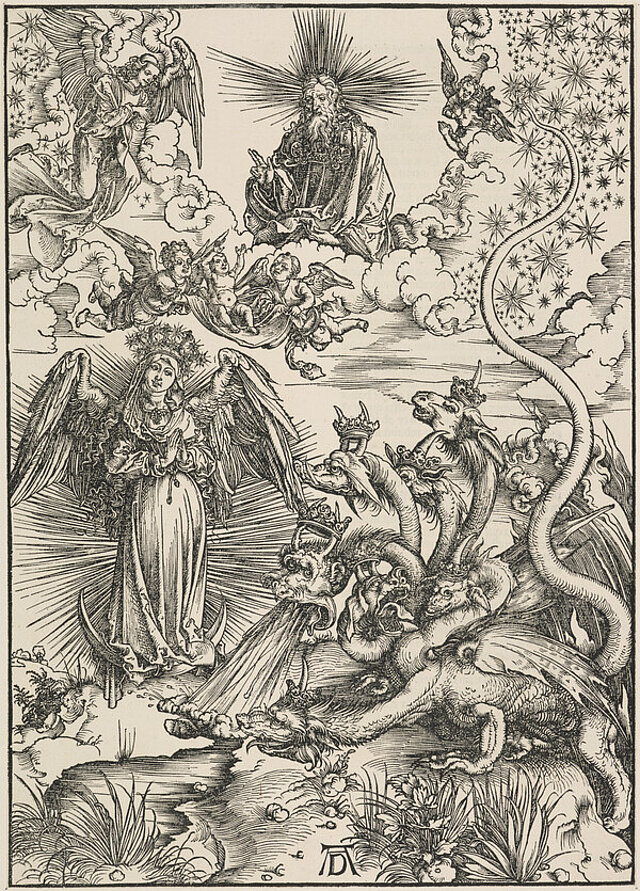 | Gendering Apocalypse: Death and Desire as Central Themes of Apocalyptic Texts and Their Modern (Mis)Uses 16:00-17:30, 20 October 2026, Stockholm time (Zoom) Drawing on Tina Pippin’s influential study Death and Desire (1992), this webinar explores the gendered dynamics of apocalyptic literature. In her work, Pippin foregrounds the intertwined themes of death and desire, demonstrating how they operate in ways that particularly affect women. Topically, in the Apocalypse of John, the few female figures, whether cast as virtuous or corrupt, are primarily configured as objects of male desire and volition rather than as subjects in their own right. Building on this framework, the webinar examines how apocalyptic texts from the Hebrew Bible and the New Testament continue to impact women and groups historically exposed to marginalization. It further considers how these texts are strategically (mis)used in contemporary contexts, focusing on examples from the United States and Europe, wherein White Christian conservative and far-right actors mobilize apocalyptic rhetoric. The webinar will feature Tina Pippin engaging in conversation with Ov Cristian Norocel and Blaženka Scheuer. Tina Pippin is the Wallace M. Alston Professor of Bible and Religion at Agnes Scott College. Her interests include the Bible and culture, women and religion, ethics, religion and social justice, science and religion, human rights education, apocalypticism, religion and postmodernism, and feminist ethics. Pippin is the author of Death and Desire: The Rhetoric of Gender in the Apocalypse of John (1992), Apocalyptic Bodies: The Biblical End of the World in Text and Image (1999), and The Actual Jesus (2025). Ov Cristian Norocel is Docent and Senior Lecturer in Gender Studies at Lund University. He deploys critical and intersectional perspectives to study the radical-right populist and far-right construction and maintenance of power hierarchies. For At the End of the World, Norocel investigates the role of gender and sexuality in reactionary political mobilization, focusing on how representations of apocalypse are deployed to consolidate political power in opposition to marginalized groups. Blaženka Scheuer, Docent and Senior Lecturer in Biblical Studies at Lund University, conducts research that focuses on three main areas: prophetic texts of the Hebrew Bible, interpretation of the narratives of the Hebrew Bible in early Jewish and Christian traditions, and the relationship between contemporary narratives about artificial intelligence and narratives about creation of humans in the book of Genesis. For At the End of the World, Scheuer explores how apocalyptic imaginary of the Hebrew Bible and early Jewish literature shaped conceptions of gender and otherness. Aaron James Goldman will chair the webinar. He is a research fellow in Philosophy of Religion at Lund University's Centre for Theology and Religious Studies. PLEASE NOTE: Our protocols for webinar attendance have changed. You must register in advance to attend this webinar. Please fill out this very short form, and a link to the Zoom webinar will be emailed to you at the email address you supply about 24 hours before the webinar begins: https://forms.gle/z5vGtARJ1Fzd6shV6. We look forward to seeing you there! | | |
Recent publications and media appearances by our team | | |
Mårten Björk authored an article titled “‘Deliver me from my necessities’: R. A. Markus and Erik Peterson on the End of Law” for Political Theology.
Mårten Björk and Tormod Johansen published a book titled The End of Law: Political Theology and the Crisis of Sovereignty with Routledge.
Natalie Bloch published a chapter titled “The Psychedelic Temple – Re-imagining ancient Jewish Temple Space through Psychedelic Aesthetics” in Psychedelic Intersections: 2025 Conference Anthology, edited by Jeffrey Breau and Paul Gillis-Smith.
Allan Burnett authored a piece titled “Media Philosophy, Postmodern Eschatology and Theological Starting Points, c.1960–Present” for Ulrich Schmiedel, Ola Sigurdson & Jayne Svenungsson, eds., Engaging Werner G. Jeanrond’s Theological Thinking: Starting Points.
Patrik Fridlund authored two popular pieces: ‘Populism är en giftig idé’ for Opulens and ‘Idén om en etnisk stat — och konsekvenser både här och där’ for Nya Argus 119:1–2.
Tobias Hägerland was interviewed by Hanna Erlingson and Janna Roosch for the podcast Ett HUM om romarriket | Humanistiska fakulteten, Göteborgs universitet under the title "Undergång, odjurets tal och kejsare Nero – om romarriket i Uppenbarelseboken" [Destruction, the number of the beast, and Emperor Nero – on the Roman Empire in the Book of Revelation].
Jayne Svenungsson wrote a chapter titled “Beginning Anew, or Dreaming of ‘a Europe to Come’” for Ulrich Schmiedel, Ola Sigurdson & Svenungsson, eds., Engaging Werner G. Jeanrond’s Theological Thinking. | | |
Announcements
Collaboration between Max Liljefors and the Artistic Platform Gylleboverket Gylleboverket, led by artists Jona Elfdahl and Etta Säfve, has received a major grant from Svenska Postkodlotteriets Stiftelse (Swedish Postcode Lottery Foundation) for their project Transition Laboratory, 2026–27. Transition Laboratory consists of an extensive series of workshop and seminar programs, called ’laboratories’, and curated by invited researchers and artists. The purpose is to explore different aspects and layers of what a radical transformation to a sustainable society can mean in practice and theory. Max Liljefors, professor of art history and visual studies, Lund University, and researcher in the At the End of the World program, has been invited to curate one laboratory, which will focus on four critical questions regarding beliefs, affects, and experiences pertaining to the threat of a collapsing world. More information is available on this page. Memory and Hope in the Age of Polycrisis From fall 2026 through spring 2027, Aaron James Goldman will serve as a member of the Pufendorf Theme Memory and Hope in the Age of Polycrisis (coordinators: Barbara Törnquist-Plewa and Eleonora Narvselius) at Lund University's Pufendorf Institute for Advanced Studies. The Theme is an interdisciplinary investigation into possibilities for cultural memory to combat the global overlapping and cascading crises of the early 21st century. From Chaos to Creativity – Young People Explore the Apocalypse on Stage On September 22, the research team of At the End of the World held a digital meeting with playwrights at Riksteatern/Länk to launch the collaboration From Chaos to Creativity – Young People Explore the Apocalypse on Stage. The collaboration is ongoing. This joint initiative between Lund University and Riksteatern engages young people across Sweden in exploring and reimagining apocalyptic imaginaries through the performing arts. In dialogue with the research conducted within At the End of the World and in close collaboration with the research team, playwrights will create five new plays that will be made available to youth theatre groups throughout the country. The collaboration is supported by a research communication grant of nearly SEK 2,000,000 from Formas, awarded to Johannes Stripple. The project is managed jointly by Stripple and Natalie Bloch. Course offerings Blaženka Scheuer has begun coordinating the Swedish-language summer course, featuring several members of our research team. It is titled “Vid världens slut: Apokalyptiska föreställningar i historia och nutid” (7,5 hp ; CTRD13). The course will be offered in Swedish from 8 June until 16 August 2026. Signup has ended officially, though later enrollment will be possible. Allan Burnett has developed a new course for the Spring 2026 History undergraduate program at Linköping called 'Media and War'. This course is for Level 3 History students enrolled at the university and it is an expansion of a course he developed earlier for Level 2 students. Further information will be made available on Linköping University's website. | | |
|
|